
"Congolese coffee"
210 article(s) found
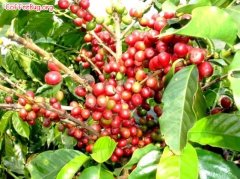
The basic knowledge of coffee beans The three original species of coffee
Coffee belongs to the evergreen shrubs of the genus Coffee of Rubiaceae, centered in tropical regions, with about 500 genera and 6000 species of Rubiaceae plants distributed here. Coffee has long been thought to have certain medicinal effects, such as invigorating stomach, refreshing mind, stopping bleeding, dissipating heat, strengthening body, etc. More famous Rubiaceae plants and gardenia, its fruit has long been dried as medicine
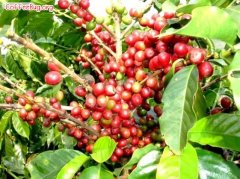
The basics of coffee beans the three native species of coffee
Coffee belongs to the evergreen shrub of the genus Rubiaceae, which is centered in the tropics. There are about 6000 species of Rubiaceae belonging to 500 genera. Coffee has always been thought to have certain effects, such as strengthening the stomach, waking up the brain, stopping bleeding, dissipating heat, strengthening the body, and so on. The more famous Rubiaceae plant is Gardenia jasminoides, whose fruit was dried and used as medicinal material a long time ago. The three native species of coffee

The basic knowledge of Coffee beans Coffee beans are the three native species of coffee
Coffee belongs to the evergreen shrub of the genus Rubiaceae, which is centered in the tropics. There are about 6000 species of Rubiaceae belonging to 500 genera. Coffee has always been thought to have certain effects, such as strengthening the stomach, waking up the brain, stopping bleeding, dissipating heat, strengthening the body, and so on. The more famous Rubiaceae plant is Gardenia jasminoides, whose fruit was dried and used as medicinal material a long time ago. The three native species of coffee

How many coffee producing countries are there in the world?
1. Arabica species (scientific name Coffea arabica) Arabica species is native to Ethiopia's Abyssinian plateau (now Ethiopia plateau), early mainly as a medicinal food (Islamic lovers used as a healing medicine or to wake up), 13th century developed the habit of baking and drinking, 16th century introduced to Europe via Arabia
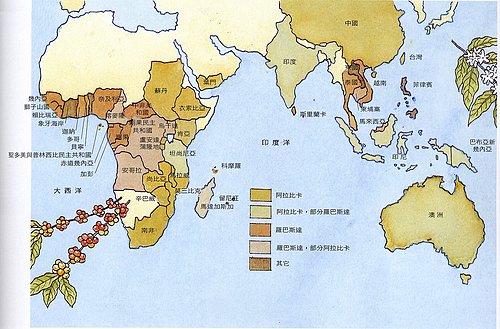
The basic knowledge of Coffee beans the three native species of coffee Robsta species Arabica species Libby
Basic knowledge of coffee beans (1) Coffee belongs to the evergreen shrub of the genus Rubiaceae, which is centered in the tropics. There are about 6000 species of Rubiaceae belonging to 500 genera. Coffee has always been thought to have certain effects, such as strengthening the stomach, waking up the brain, stopping bleeding, dissipating heat, strengthening the body, and so on. The more famous Rubiaceae plant is Gardenia jasminoides, whose fruit was dried and used as medicine a long time ago.

Flavor and taste of coffee manor in Indonesia Kahayang Gan Manor
The classification will be more complicated. Some Arabica coffee beans are quite close to the native species, while others are quite similar to the Robusta species. Even if the coffee has the same name (named from the place of origin), as long as the cultivated varieties are different, the flavor is different from the leaf rust-resistant varieties found in the African Congo, teaching the Arabica species to be more resistant to the disease. People like to plant Robusta

Share the story of Huang Wei, a famous Chinese coffee roaster.
As an imported product from the West, it is not easy for coffee to give birth to a coffee master in China. Our protagonist today is Huang Wei, who learned cocoa processing technology and coffee roasting equipment and production technology during his participation in the construction of a cocoa processing plant assisted by China in Ghana in Africa. After returning to China in 2001, due to work related to Chinese coffee growers in Yunnan, and so on.
Introduction of Fine Coffee from Congo
Congo's boutique coffee comes from Kivu, which is the general name of Eastern Congo (Kinshasa) and covers a very wide geographical area. Congo's boutique coffee comes from Kivu, which is the general name of Eastern Congo (Kinshasa) and covers a very wide geographical area. It is adjacent to Uganda, Rwanda, Burundi and the east of Lake Tanganyika. Kivu is divided into three provinces, North Kivu (North Kivu) and South Kivu

What about coffee oil? is coffee oil good for your health? why does coffee produce oil?
Professional coffee knowledge exchange more information about coffee beans Please pay attention to the coffee workshop (Wechat official account cafe_style) Coffee beans look oily on the surface, which comes from the lipids contained in the beans themselves. Arabica coffee beans contain nearly twice as many lipids as Congolese coffee beans, so Arabica seeds are more likely to produce oil if they are roasted at the same degree. The reason why there is special emphasis here.

Why is there oil on the surface of roasted coffee beans? "interpreting the Secrets of Coffee with Science"
Professional baristas Please pay attention to the coffee shop (Wechat official account cafe_style) coffee beans look shiny on the surface, which comes from the lipids in the beans themselves. Arabica coffee beans contain nearly twice as many lipids as Congolese coffee beans, so Arabica seeds are more likely to produce oil if they are roasted at the same degree. The special emphasis here is that "the same degree of baking is due to

Three Coffee categories and Seven Coffee producing areas-how many Coffee producing countries in the World
Robusta: a leaf rust-resistant variety found in Congo, Africa, that is more resistant than Arabica. In fact, the Robusta species was originally a mutant of the Congolese species. Arabica coffee beans grow in the cold tropical high-sea areas, and the high-temperature and humid zone that is not suitable for Arabica coffee is where Robsta coffee grows. The Robusta species is generally used

Kaha Yang Gan Manor Coffee Manor in Indonesia Kopi Luwak
Arabica coffee beans grow in tropical colder high-altitude areas, and the hot and humid zone that is not suitable for Arabica coffee is where robusta coffee grows. Robusta has a unique aroma (called Rob smell, which some people think is musty) and bitter, accounting for only 2% of mixed coffee. 3% of mixed coffee, the whole cup of coffee becomes Robusta flavor. Its flavor

Kahayangan Manor Coffee Bean Origin and Development History and Culture
As Indonesian consumers become more aware of quality coffee, the number of specialty coffee shops has increased. According to coffee shop owners, specialty coffee shops are growing rapidly in big cities such as Jakarta, Surabaya, Bandung and Bali. This also shows that consumers have become more aware of coffee. Coffee shop owners must choose quality coffee ingredients.
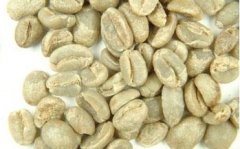
African coffee raw beans Congo Kivu 4/Kivu 4
Kivu coffee is slightly acidity, but citrus acidity is slowly rising full, so the taste is clear and peaceful, coupled with floral, vanilla and erratic tobacco flavor, is a very refreshing and playful coffee.

Traditional Kahayangan estate Fine coffee beans cultivation Location Climate Elevation Profile
Another important feature of Indonesian coffee shops that cannot be ignored is the proud recommendation of coffee shop owners for local coffee, even big brands like Starbucks Indonesia still provide quality coffee from Sumatra locally to meet customer needs. This is another factor that Indonesians take into account when considering the quality of local coffee. The owner of the cafe was very interested

Caffeine content of Liberian species-caffeine content of all kinds of coffee
Caffeine content of Liberian species-caffeine content of all kinds of coffee (Coffealiberica), West Africa is the origin of Liberian coffee, whether it is high or low temperature, humid or dry environment, it has a strong adaptability, but it is not resistant to leaf rust and its flavor is worse than that of Alabica robusta species, scientific name coffee RobustaLind.
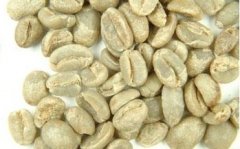
African coffee raw beans Congo Kivu 4/Kivu 4
[product name] Kivu 4 (Kivu 4) [place] Congo (D.R. Congo) [place] washing [baking] recommended baking degree: medium or deep baking has a unique dry aroma: fresh smell similar to soil; light flood has a bright sour taste, similar to Kenya, and a bitter taste similar to tobacco. The overall performance of deep baking is between Kenya and Indonesia.

Does Robusta Robusta belong to boutique coffee? are Robusta coffee beans good?
Professional coffee knowledge exchange more coffee bean information please follow the coffee workshop (Wechat official account cafe_style) what do you think of Robusta coffee beans? High caffeine and high chlorogenic acid taste terrible? Medicine, rubber, bitterness, leather, miscellaneous sensation, etc. The robusta coffee bean comes from a mutant of the Congolese species (scientific name: Coffee Canephora).

Kahayang Gan Manor tends to have a unique Flavor. Simple treatment method for Grinding degree of Fine Coffee beans
ExcelsoCoffee: a chain of coffee shops that integrates planting, production, export and sales equipment, has now opened 19 branches and has become a very popular local coffee chain among Indonesians. BengawanSoloCoffee: there are 37 branches, starting with IpengWi-djojo 's obsession with coffee taste, focusing on choosing high-quality local ingredients and roasting their own coffee.

A brief introduction to the Origin and Development of Fine Coffee beans in Kahayang Gan Manor with unique Flavor
When Indonesian consumers know more about quality coffee, there is an increase in the number of special coffee shops, according to coffee owners: in big cities like Jakarta, Surabaya, Bandung and Bali, special coffee shops are growing rapidly, which also shows that consumers know more about coffee, and coffee shopkeepers must choose high-quality coffee ingredients.